
(Affiliate Post. I earn commission if you buy via my links—no additional cost incurred. Image: Amazon)
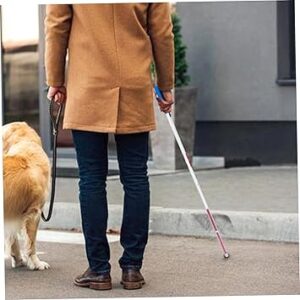
Why People With Sight Loss Use White Sticks?
Different Types of White Stick
- Long Cane/Stick
The traditional long white stick or cane is known as a “Hoover”, named after Dr Richard Hoover (1944) and is designed as a mobility tool to detect objects in the user’s path.
The length of the stick depends on the user’s height and needs to extend from the chest to the floor.
- A Guide Cane
The Guide cane is shorter and generally extends from the user’s waist to the floor. It’s designed to scan for kerbs and steps and used diagonally across the body to protect the user’s space and warn them of any obstacles immediately ahead.
- Identification Cane /Symbol Cane
This cane is shorter and lighter than the longer Hoover ones and has no practical use as a mobility aid. The identification cane is used as an indication to others that the user has a visual impairment.
- Support Cane:
The white support cane is designed to offer physical stability to a visually impaired user in the same way a standard walking stick would. It also works as a means of identification.


