
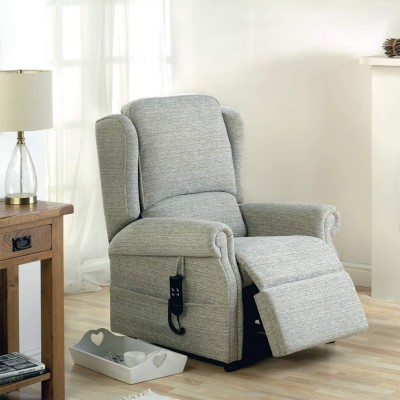
Health Benefits of Rise and Recline chairs. Image shows an grey armchair with the footplate slightly raised. There is a table to the side with a lamp on it

Health Benefits of Rise and Recline Chairs

Health Benefits of Rise and Recline chairs. Image shows an grey armchair with the footplate slightly raised. There is a table to the side with a lamp on it

(Image source: Cavendish Healthcare)

Health Benefits of Rise and Recline Chairs

Do you know the health benefits of rise-and-recline chairs?  Many chairs nowadays have what is known as “Tilt” or “Tilt-in-Space”. This offers a feeling of weightlessness.

There’s a misconception that rise-and-recline chairs are for “Old” people. Good posture and seating are essential for all of us to ensure we care for our spines.

Raising our legs is also good for circulation, ensuring optimum blood flow to the heart. This helps reduce swollen ankles and promotes relaxation

Additional Health Benefits

* Improved posture support: The fixed seat‑to‑back angle helps maintain spinal alignment and reduces slumping.
* Reduced pressure on vulnerable areas: Even weight distribution lowers the risk of pressure sores, especially during long sitting periods.
*Better circulation: Gentle tilting and leg elevation can help reduce swelling and improve blood flow.
* Enhanced comfort for long‑term sitting: The tilt mechanism allows repositioning without disturbing joint angles, reducing fatigue and discomfort.
* Lower risk of shear and friction injuries: Because the body stays in the same position as the chair tilts, skin is protected from sliding forces.
* Pain relief and pressure reduction after surgery or injury: Supportive positioning can ease aches and pains and promote healing.
* Improved breathing and digestion: Upright, supported posture can help expand the chest and reduce abdominal compression.
*Greater independence and safer transfers: The rise function assists users in standing with less strain on joints and muscles.
*Better overall well-being and comfort: Consistent support helps users feel more secure, relaxed, and stable throughout the day.

What To Look For in A Chair

A good chair needs to be the right size for you. One size does not fit all. If possible, visit a specialist showroom and try some out for size and comfort.

You need to be able to sit down in the chair with your bottom to the back cushion. You shouldn’t need to shuffle back. When it comes to the length of the leg/footrest, you want your heels to be just shy of the end. If your heels are resting on the footrest for prolonged periods, it can lead to pressure issues.

Caron

Award-winning blogger and former care columnist for Devon Life magazine. I am passionate about helping elderly people and people with dementia live purposeful and independent lives.
Designer of the Dementia Assistance Card and Points Of Light award recipient, Caron hopes to help carers when resources are limited and demand is ever-increasing. I am here to support you.

Leave a Reply

Your email address will not be published. Required fields are marked *

This site uses Akismet to reduce spam. Learn how your comment data is processed.